Autumn or winter for the northern lights in Yellowknife
Yellowknife has two aurora seasons with a cloudy gap between them, and each one makes for a very different night. Autumn gives you open lakes and milder air, while winter trades them for snow and deep cold on long, dark nights. Pick the one that suits you, then plan several nights.
Two seasons with a gap between them
Yellowknife has two aurora seasons. The first runs roughly from mid-August to early October, the second from mid-November to early April. Between them sits a cloudy stretch of freeze-up, and around midsummer the sky never gets dark enough to show the lights at all.
The town sits under the auroral oval, the ring where the aurora is most often overhead. The lights can show up on almost any clear, dark night in either season, though they are never guaranteed in any month.
So the question is less about when the aurora is strongest and more about what kind of night you want around it. The state of the lakes and the depth of the cold change a great deal between September and February.
Autumn by the water, mid-August to early October
In autumn the lakes along the Ingraham Trail are still open water. On a calm night the water reflects the aurora, so it shows twice. Photographers come for exactly that.
Nights are milder too, often hovering around freezing. A warm jacket and gloves cover most of it. Milder air also helps anyone traveling with children, as our guide to aurora nights with kids explains.
The catch is the length of the night early on. In late August darkness arrives late and leaves early, so the window for the lights is short. By late September the nights have stretched a long way.
Winter in the deep cold, mid-November to early April
Winter brings the long nights. From December into February it is dark by late afternoon, and the hours from roughly 10 pm to 2 am, often the busiest for the aurora, fall in the middle of a very long night.
Yellowknife winters are dry, and snow on the frozen lakes turns them into wide, open foregrounds. The shore of Great Slave Lake and the smaller lakes outside town look nothing like their autumn selves.
The price is cold. January nights often drop below −30 °C (−22 °F), and on a tour you stand still for long stretches. Our guide on dressing for minus 30 covers the layers in detail.
The weeks in between
Freeze-up, roughly late October into early November, is often the cloudiest part of the year as the lakes give off moisture before they ice over. The ice is also unsafe then, so nobody should walk out on it.
Spring has its own gap. By mid-April the nights are short and getting shorter, and around midsummer the sky stays too bright for the aurora. Summer is a fine time to visit Yellowknife, only not for this.
If your dates fall in a shoulder week, check which months each listing offers before you build a trip around it. Operators set their own seasons, and they do not always match one another.
Moon phases and busy weeks
The moon matters more than most first-timers expect. A full moon washes out faint aurora, while the darker skies around a new moon let weaker displays show. A bright moon does light up the snow and the trees, which some photographers like.
Weekends and holidays fill tours faster, and Chinese New Year can bring many visitors to Yellowknife. If your dates are flexible, a midweek stretch near the new moon is a sensible target.
Clouds, not solar activity, are the usual spoiler under the auroral oval. Plan several nights in a row whatever month you pick, and read how many nights to book before you commit.
A lodge for unsettled weather
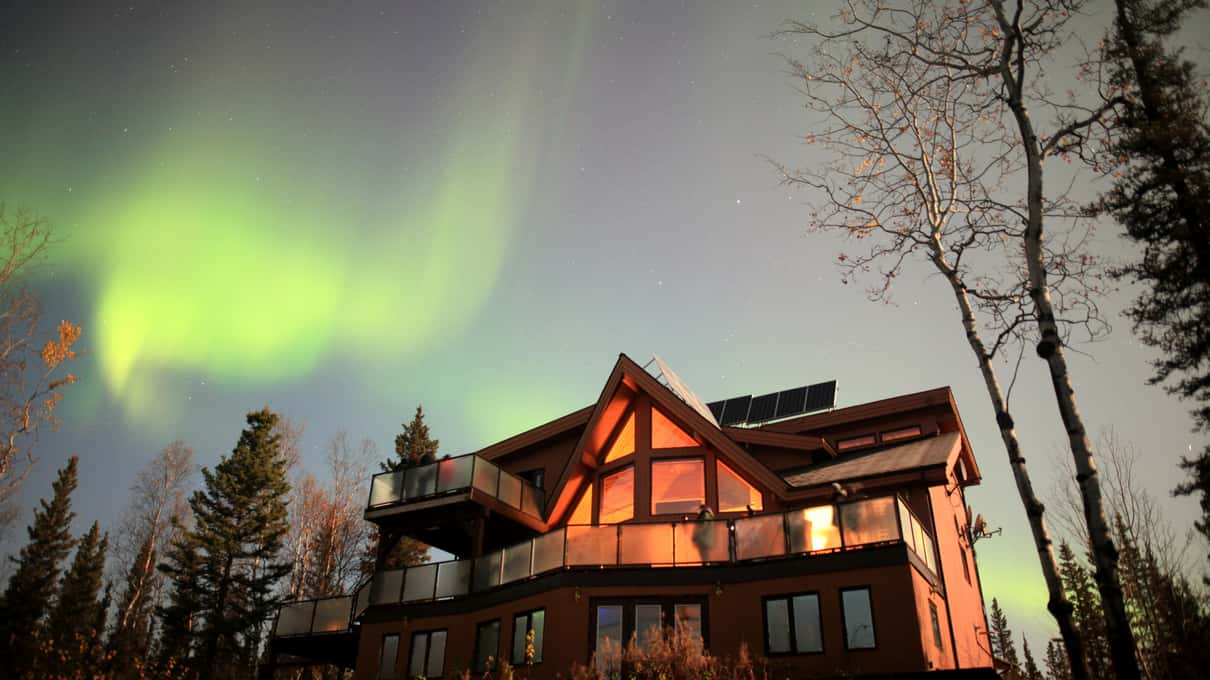
Destination NWT's lodge and chase tour, from ~$98, uses a warm, spacious lodge near Madeline Lake on clear nights and drives to a clearer location when clouds roam. That flexibility helps most in the cloudier shoulder weeks.
It holds 4.6 from 140+ reviews on Viator and 4.6 from 50+ on GetYourGuide. The lodge's board and arcade games count for more in January than in September, as do its warm modern toilets and hot drinks.
A warm base when the weather is unsure
Four hours with round-trip hotel transport. A professional photographer shoots the night, and you get the original digital photos at no extra cost. Free cancellation up to 24 hours ahead on both sites lets you move the night if the cloud forecast turns. From ~$98.
The catch is size, as the lodge takes 33 guests on GetYourGuide (38 on Viator) and its games room keeps things lively. Check which months the listing offers for your dates, since we cannot confirm it runs in autumn.
For the other shapes, our comparison of tour styles sets them side by side. The guide to what each tour costs lists every price once your month is settled.
Picking your window
- Choose autumn for reflections on open lakes and nights near freezing
- Choose winter for snow on frozen lakes and the longest nights, if you can handle deep cold
- Avoid freeze-up in late October and early November where you can
- Skip late April through July, when the nights are too bright
- Aim for the days around a new moon and plan three or four nights
Whatever you choose, learn how to read the aurora forecast so you can move a night when clouds roll in. If the sky stays shut anyway, our plan for cloudy nights covers your options.