The Ingraham Trail, Yellowknife's northern lights road
Most aurora tours from Yellowknife spend at least part of the night on one road. Highway 4, the Ingraham Trail, heads east out of town past lakes and rocky hills where the city glow fades fast. This guide covers the lakes along it and the tours that use it, plus what to expect if you drive it yourself.
A road east into the dark
The Ingraham Trail is Highway 4, running east from Yellowknife for about 70 km (43 miles). It ends near Tibbitt Lake, and on the way it passes a long string of lakes set among the rocky hills of the Canadian Shield.
Once you leave the edge of the city, the streetlights fall behind within minutes. That quick dark is the main reason the tours head this way.
The city and the land around the trail are the traditional territory of the Yellowknives Dene First Nation. Respect private land and cabin signs when you pull over anywhere along the road.
Why it works for the aurora
Two things make the trail the city's aurora road. Dark sky lies only a short drive from your hotel, and the lakes give wide views all the way to the horizon.
In winter those lakes freeze into flat white foregrounds, with a treeline on the far shore to frame the sky. You can see a low green arc across the ice that a forest would hide.
Yellowknife sits under the auroral oval, so the lights often appear high overhead as well as near the horizon. They still come with no guarantee, and clouds decide most nights.
Lakes along the way
The lakes come one after another as you drive east. Names you may hear from a guide include these, roughly in order from town.
- Yellowknife River Territorial Park, near the start of the trail
- Prosperous Lake
- Madeline Lake, where Destination NWT has its lodge
- Pontoon Lake
- Prelude Lake
- Hidden Lake, inside Hidden Lake Territorial Park
- Tibbitt Lake, near the end of the road
How far a tour drives depends on the night and the operator, so the stops change. The aim is open sky without clouds, not a particular lake.
Which tours use the trail
Yellowknife Vacations' bus from ~$62 is built around the trail. It stops at three different locations along it for different views and photos, with live commentary from the driver-guide and a professional photographer on board.
Destination NWT from ~$98 bases its nights at a warm lodge near Madeline Lake. On cloudy nights its bus spends more time driving toward a clearer area.
Aurora Bus Tours from ~$69 lists Yellowknife River Territorial Park as a stop on its Viator itinerary. Beyond that, its guide picks spots by the conditions of the night.
The cabin tour from ~$101 uses its own cabin about 15 minutes from town. Our guide to tour styles explains how the four nights differ.
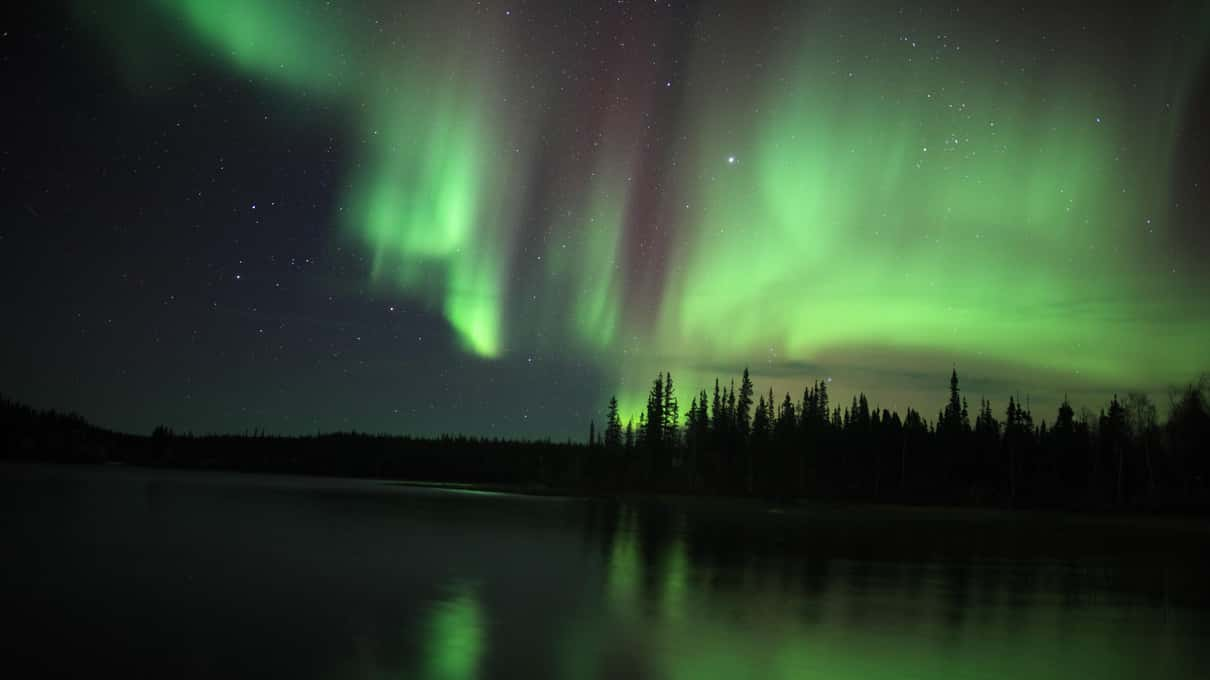
Three stops on the trail in one night
Yellowknife Vacations' four-hour bus for up to 16 guests carries hot cocoa and cookies. The photographer's pictures are free, and GetYourGuide rates it 4.7 from 290+ reviews.
What a stop on the trail feels like
A stop on a winter night means stepping from a warm bus into deep cold beside a lake. Your eyes need several minutes to adjust to the dark before faint aurora shows clearly.
Faint aurora can look grey-white to the eye while a camera picks up green. When it strengthens, the color turns obvious. The light can then sweep across the sky within seconds.
Standing still on ice is colder than walking, so short spells outside with breaks on the bus work better than one long wait. Hand and toe warmers in your pockets help at every stop.
Use a headlamp with a red light rather than white, so you do not spoil other people's night vision or their photos. Point it at the ground as you walk.
Driving it yourself at night
You can rent a car and drive the trail on your own, but treat it with respect. Expect ice on the road and no streetlights at all. Wildlife can step out of the trees without warning.
Never stop on the road itself to look up. Pull fully off at a pull-out or a parking area, and expect other aurora watchers to be using the same spots. A dark car on the shoulder is hard to see, so park well clear of the traffic lane.
Cold is the other risk. At −30 °C (−22 °F) a car can struggle to start, and a breakdown far from town is serious, since exposed skin can get frostbite quickly on the coldest nights.
Carry full winter clothing for everyone and keep the tank well filled. Road conditions change from night to night, so check them before you set out.
For a first visit, a tour is the simpler choice, since the guide knows the pull-outs and the bus stays warm. Our clothing guide applies either way.
Planning your night on the trail
The trail looks different in autumn, when the lakes are still open and can reflect the aurora, than in winter, when they lie frozen under snow. Our guide to the best months covers the trade.
Autumn nights (roughly mid-August to early October) hover around freezing or just under it. Winter (about mid-November to early April) brings long nights and cold that often drops below −30 °C (−22 °F) in January.
Photographers should read our page on photographing the lights before the first night. The forecast guide explains why clouds matter more than the Kp index, and the cost comparison sets out the fares.