What to wear for a Yellowknife aurora night at minus 30
Winter nights out on the land around Yellowknife are some of the coldest most visitors will ever stand in. The good news is that the cold is predictable and the right clothes handle it. This guide goes through the layers one by one and the warm places each tour offers.
How cold the nights get
Winter nights in Yellowknife are often −20 to −35 °C (−4 to −31 °F), and January nights often fall below −30 °C (−22 °F). Wind out on an open lake makes it feel colder again.
Autumn is gentler, since from about mid-August into early October nights usually hover around freezing or just under it. A warm jacket and a hat often do. Our guide to the best months in Yellowknife compares the two seasons.
The air is dry, which helps, since dry cold feels less raw than damp cold at the same temperature. It still freezes exposed skin quickly, and the rest of this guide is about the deep-winter nights.
Standing still is the hard part
Walking at minus 30 is bearable in ordinary winter clothes for a short while. Standing still on a frozen lake for an hour, staring up at the sky, is a different matter, because your body makes far less heat when it barely moves.
An aurora tour mixes waiting and watching for about 4 hours, often well past midnight. Dress for the slowest, stillest part of the night, not for the walk from the bus to the shore.
The layers, from skin out
Several thinner layers trap more warmth than one thick coat, and they let you open up inside a heated bus or cabin. Cotton holds sweat and chills you. Leave jeans and cotton T-shirts at the hotel.
- A thermal base layer for top and bottom in wool or synthetic fabric
- A fleece or wool mid layer
- A down parka long enough to cover your hips, ideally with a hood
- Insulated snow pants over the base layer
- A warm hat that covers your ears, with the parka hood on top
- A neck gaiter you can pull up over your nose and cheeks
- Thin liner gloves inside thick mitts
- Insulated winter boots rated well below −30 °C, with room for your toes to move
- Wool socks, one good pair rather than two tight ones
- Hand and toe warmers for the slow hours
Hands and feet first, then the face
Fingers and toes go first, since the body pulls warmth back toward its core in deep cold. Mitts keep fingers together and warmer than gloves, and liner gloves let you work a phone for a few seconds without bare skin.
Boots matter most of all. City winter boots are rarely built for an hour on lake ice at minus 30, so check the temperature rating. Tight boots cut circulation, so leave room for your toes and choose one thick sock over two.
Your face is the part you cannot fully cover while you look up. Pull the gaiter high, and check your companions' cheeks and noses now and then. A lip balm helps as well, since the dry air cracks lips quickly.
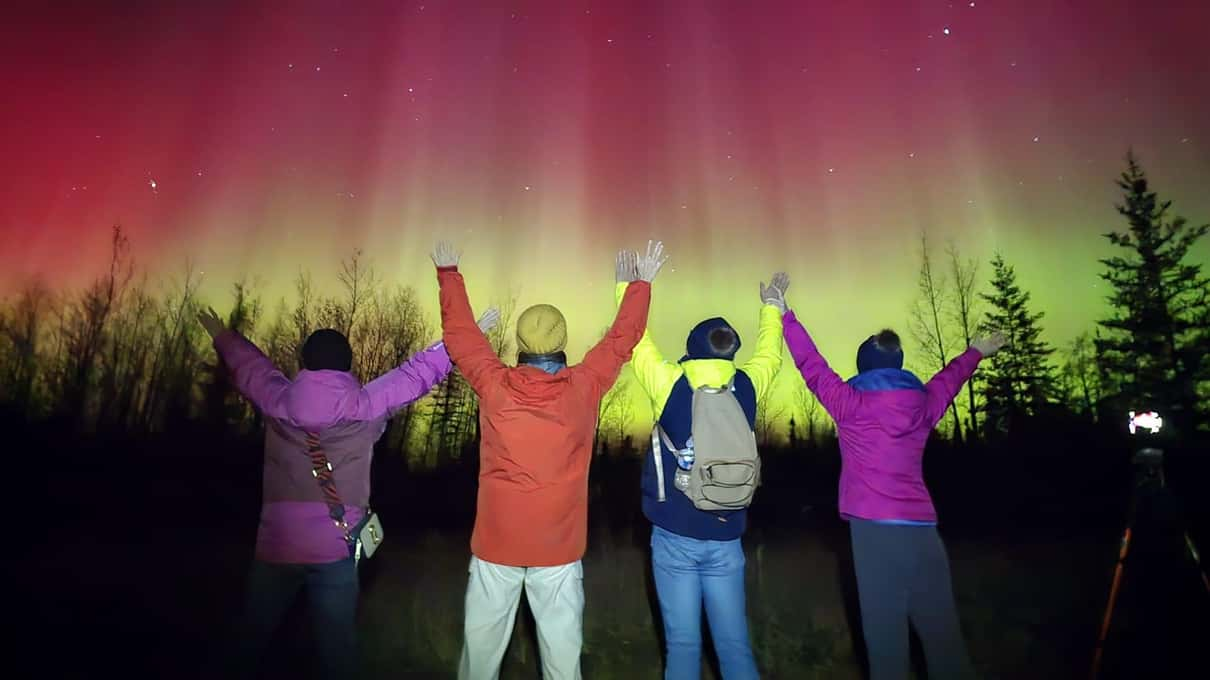
Frostbite, the warning signs
Frostbite can start on cheeks and fingers within minutes at these temperatures, especially in wind. The first signs are pale or waxy skin and a numb, stiff feeling where it stung a moment ago.
If you notice them, go back into the bus or the building and warm the skin gently against your body or in warm air. Do not rub it with snow. Telling the guide early is better than waiting until a fingertip goes white.
Warm places on each tour
How much cold you face depends partly on the tour. The cabin tour, from ~$101, keeps a heated cabin in the bush while staff check the sky every few minutes. You step out when the lights appear, and a midnight lunch of fish chowder and hot bannock helps too.
Destination NWT, from ~$98, has a warm, spacious lodge near Madeline Lake with modern toilets and hot drinks. Yellowknife Vacations from ~$62 and Aurora Bus Tours from ~$69 both have heated vehicles but no building at the stops.
Our comparison of the four tour styles weighs the warmth against the flexibility of a tour that drives to clear sky. Whichever you pick, the aurora is never guaranteed, so dress for a long wait.
A heated cabin to wait in, rentals listed
The cabin tour takes up to 17 guests from ~$101 and serves chowder and bannock at midnight. Its Viator page lists winter clothing rentals and a 4.9 from 290+ reviews, but that booking is non-refundable. GetYourGuide offers free cancellation up to 24 hours ahead.
Renting instead of buying
Few visitors own a parka and boots built for minus 30, and buying them for one trip is costly. Several local outfitters in Yellowknife rent parkas and boots, so you can arrive with ordinary layers and collect the heavy gear in town.
Among the four tours we compare, only the cabin's Viator listing names clothing rentals as included. On the other three you rent or bring your own, and our guide to what each tour costs counts that among the extras. Reserving a rental before you fly saves time on arrival.
If a cloudy forecast keeps you indoors one night, our guide to when the sky stays shut covers your options. The warm clothes will still be waiting for the next clear evening.